

Rolling and spraying stucco differ in control, efficiency, and risk. Rolling provides greater control and helps work paint into textured surfaces, making it more reliable on uneven walls. Spraying applies material faster on large, open areas but requires careful technique and added preparation to avoid missed recesses and overspray. Spray often benefits from follow-up brushing to ensure texture is filled and edges are sealed. The better method depends on wall texture, access, weather conditions, and the level of precision needed to achieve a durable exterior result.
This guide compares rolling vs spraying stucco in detail. If you’re in Edmonton, call (780) 710-3972 for EIFS stucco paint work.
Painting Stucco: Roller vs Spray
Painting stucco with a roller produces consistent coverage because the paint is pressed into the surface. Deep pores and uneven texture are filled more reliably. This reduces thin areas that wear early. The process takes longer and uses more paint, but control is high and masking needs are limited.
Spray painting covers large exterior walls quickly. Coverage depends on even passes and proper distance. Fine spray can skim over deep texture, leaving voids unless multiple passes or back-rolling are used. Overspray increases prep time and cleanup. The best painting method depends on wall texture, access, weather, and the level of control required for a durable finish.
Coverage When Using a Roller Compared to a Paint Sprayer
Coverage when painting stucco with a roller depends on physical contact with the surface. The roller pushes paint into low points, pores, and recesses, common on exterior stucco finishes. This makes coverage more consistent on rough or uneven walls. Thick-nap rollers help distribute paint evenly across peaks and valleys, reducing missed spots. Because the paint is worked into the surface, rollers are effective at building a uniform coat on porous stucco. This method uses more paint but reduces the risk of thin areas that wear early in harsh weather.
Coverage during spray painting relies on even distribution rather than pressure. Sprayers apply paint quickly, but fine droplets can skim over deep texture instead of filling it. This often requires multiple passes or back-rolling to achieve full coverage. Without that step, spray-applied paint may leave voids that allow moisture to penetrate and cause uneven aging of exterior stucco.
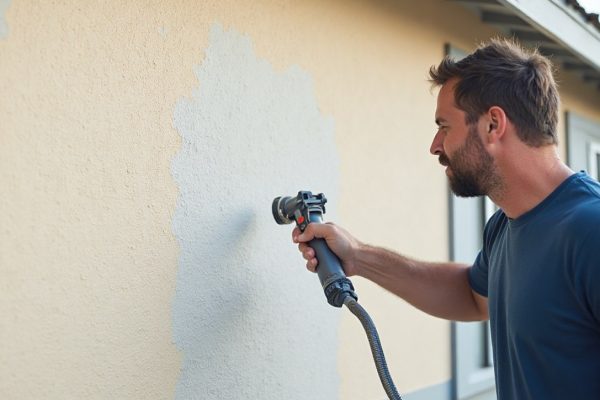
Texture Control When Painting Stucco With a Roller Versus Spraying
Texture control when painting stucco with a roller comes from direct contact with the surface. The roller follows the stucco finish’s existing profile, helping maintain its original appearance. This is especially important on older exterior walls where the texture varies from section to section. By working paint into the surface, rollers reduce the risk of flattening high points or exaggerating low areas. This makes the texture more predictable once the coat dries.
Spraying affects texture differently. Sprayers atomize paint, which can soften sharp texture edges if the material builds too quickly. Light spray passes may leave peaks coated while recesses remain thin. This can make the texture appear uneven in angled sunlight. Consistent distance and overlap are required to maintain a uniform stucco finish. On heavily textured walls, spraying often needs back-rolling to regain texture control and avoid visual inconsistencies.
Efficiency Differences Between Roller and Paint Sprayer on Exterior Stucco
Efficiency when painting stucco with a roller is tied to control rather than speed. Rolling takes longer on large exterior walls with deep texture that absorbs more paint. However, progress is steady because each section is completed thoroughly before moving on. Less time is spent correcting missed areas later. This makes rollers practical for smaller projects or walls with limited access.
Spray painting is faster during application on wide, uninterrupted stucco surfaces. A sprayer covers large areas in minutes. That speed decreases once masking, setup, and repositioning are included. Wind conditions in Edmonton also slow work, as spraying may need to pause to avoid overspray. While spraying reduces application time, total project time depends on preparation and cleanup requirements.
Overspray Risk When Spray Painting Compared to Rolling Stucco
Overspray risk is minimal when using a roller. Paint stays on the wall, with only minor splatter near the edges. This reduces the need for extensive masking around windows, doors, roofs, and nearby surfaces. Rolling is easier to control near property lines or close to landscaping. Cleanup is also simpler because excess paint does not travel beyond the work area.
Spray painting introduces a higher risk of overspray. Fine paint particles can drift onto adjacent surfaces during windy conditions common in exterior work. This requires full masking of trim, soffits, fixtures, and nearby structures. Even small gaps in masking can result in unwanted paint residue. Managing overspray is critical when using sprayers on stucco walls.
Prep Requirements for Roller Versus Spray Painting Stucco Surfaces
Preparation is required for both methods, but the scope differs. When using a roller, prep focuses on washing, drying, repairing cracks, and priming porous areas. Masking is limited to edges and transitions. This makes preparation more manageable for homeowners handling smaller projects.
Spray painting requires more extensive prep. In addition to surface cleaning and repairs, full masking is necessary to protect surrounding areas. Drop cloths, plastic sheeting, and tape must be secured against wind. Vent openings and rooflines need special attention. The prep phase often takes longer than the spray application itself. Proper preparation determines whether spraying delivers clean results or creates avoidable cleanup issues.
Roller vs Sprayer: Which One is Better?
A roller is usually the better option for exterior stucco because it provides more control and more reliable coverage. Rolling helps maintain the existing surface profile and makes it easier to apply texture to exterior stucco without leaving thin spots. Brushing supports this process by working paint into edges, corners, and recessed areas that rollers miss.
Spraying can be faster on large, open walls, but results depend heavily on technique and conditions. Fine spray may not fully fill deep texture unless brushing or back-rolling follows. For most exterior stucco surfaces, using a roller with targeted brushing produces a more consistent and durable finish than spraying alone.
Depend Exteriors Offers Professional Stucco Painting in Edmonton AB
Depend Exteriors delivers professional stucco painting designed for Alberta conditions. We rely on controlled application supported by detailed brush and brushing techniques to work material into textured surfaces and critical transition points. This method improves adhesion at edges, corners, and recessed areas where failures often start.
Our team prioritizes proper surface preparation, clean detailing, and durable finishes that withstand moisture and freeze-thaw cycles. Homeowners choose Depend Exteriors for dependable workmanship, clear communication, and exterior results built to perform in Edmonton’s climate.
Call (780) 710-3972 now!
FAQs
Is it better to spray or roll paint on stucco?
Rolling stucco paint gives more consistent coverage because the paint is pressed into the surface texture. This helps fill pores and reduce thin spots. A stucco sprayer applies paint faster on large walls, but coverage depends on technique and often requires back-rolling. The better method depends on wall texture, access, and weather conditions.
Is brushing necessary during small stucco painting projects?
Yes. Brushing helps work paint into tight areas, edges, and deep texture that rollers and sprayers may miss. Brushes improve adhesion around trim and transitions, which helps each coat bond properly. This step reduces missed spots and improves the overall paint job, even when a paint sprayer is used for larger sections.
When should a brush be used instead of a roller or sprayer on stucco?
A brush should be used where control matters more than speed. Brushes are best around windows, corners, and joints where sprayers can overshoot and rollers cannot reach. Brushing helps push paint into small recesses, supports clean edges, and strengthens coverage between coats, especially when sprayers are impractical or access is limited.


