

To spot signs of hail damage on stucco, focus on changes to the surface that indicate impact and moisture entry rather than obvious breakage. Hail often compresses the stucco finish, leaving shallow dents, flattened texture, or minor, irregular marks. Check for short hairline fractures near impact points, especially around windows, corners, and trim lines where stress is higher.
Discoloration, dark spots, or vertical streaks can signal moisture movement behind the wall after impacts. Pressing on suspect areas may reveal softness caused by compressed layers, particularly on EIFS systems. These signs help determine whether stucco damage is cosmetic or requires repairs to protect the wall system.
In this guide, we cover how to spot signs of hail damage on stucco. If you’re in Edmonton, call (780) 710-3972 for EIFS stucco repair.
Look for Circular Impact Marks and Dents on the Stucco Surface After a Storm
Look for circular impact marks and shallow dents on the stucco surface after a storm to identify potential damage. These marks form when hard ice strikes the finish and compresses the material instead of cutting through it. The texture often appears flattened or bruised compared to the surrounding areas.
Run your hand across the wall to check for unevenness. Soft or spongy spots can indicate compression beneath the surface, especially on EIFS systems with insulation behind the finish. These areas may look intact, but can lose their ability to shed water. Over time, moisture infiltration can begin at these weakened points, leading to deeper wall issues if repairs are delayed.
Check for Hairline Cracks That Form on Stucco Walls
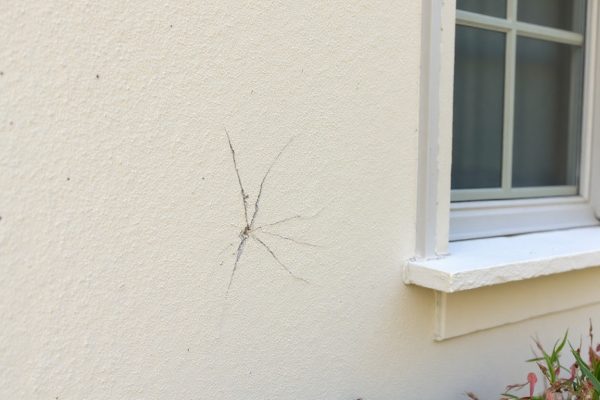
Check for hairline cracks that form around impact points on stucco walls, as these often signal early hail damage. These cracks usually appear short and irregular rather than long or straight. They can spread outward from a small dent or flattened area on the stucco surface.
Look closely near windows, corners, and trim lines. These areas already experience stress from movement and are more likely to crack after impacts. Use angled light to spot fine fractures that disappear under direct sunlight. Even narrow cracks can allow water infiltration during rain events. Once moisture enters, repeated wetting increases the risk of water damage and hidden mold growth inside the wall system, especially on EIFS assemblies.
Inspect the Stucco Surface for Discoloration and Dark Spots After Storms
Inspect the stucco surface for discoloration and dark spots after storms, as these can indicate moisture movement behind the finish. Discoloration often appears uneven and may not match normal weathering patterns. Darkened patches sometimes form days after impacts, not immediately.
Focus on areas below visible dents or cracks. Water can enter through compromised finish layers and travel downward inside the wall. This movement creates faint streaks or colour changes on the exterior. These signs suggest moisture infiltration rather than surface staining. If ignored, trapped moisture increases the likelihood of water damage and long-term deterioration, requiring more extensive stucco repairs instead of localized fixes.
Press on Suspect Areas to Detect Softness in the Stucco Finish
Press on suspect areas to detect softness in the stucco finish, which can reveal hidden impact damage. A sound section should feel firm and consistent. Soft or yielding spots often indicate compressed material beneath the surface.
This issue is common after hailstorms on EIFS systems. The insulation layer can compress without breaking the finish coat. While the wall may appear intact, its protective function is reduced. These compressed zones allow moisture infiltration during wind-driven rain. Repeated exposure increases the risk of internal water damage and mold. Identifying softness early helps determine whether repair stucco work is needed before structural layers are affected.
Look for Vertical Streaks That Develop Below Impacted Areas
Look for vertical streaks that develop below impacted areas, as these often trace the path of water movement inside stucco walls. Streaks usually appear lighter or darker than the surrounding finish. They may follow a narrow line downward rather than spreading outward.
These marks form when water enters through cracks or dents and carries minerals or dirt along the wall cavity. The exterior finish shows the path even if the entry point is small. This pattern is a strong indicator of stucco hail damage rather than surface aging. Left unaddressed, ongoing moisture movement increases damage and can turn minor issues into larger stucco repairs involving multiple wall sections.
Inspect Lower Wall Sections for Signs of Water Damage After Stucco Hail Damage
Inspect lower wall sections for signs of water damage after stucco hail damage because moisture often travels downward inside the wall assembly. Even when impacts occur higher up, water follows gravity and collects near the base of stucco walls. This makes the lower sections one of the first places where stucco damage becomes visible.
Look for darkened areas, soft patches, or surface breakdown near grade lines and foundation transitions. Pay attention to areas behind downspouts or below window openings, where runoff increases exposure. Bubbling, peeling, or persistent dampness can indicate trapped moisture rather than surface staining. These conditions suggest underlying stucco damage that may not dry out on its own.
Call Depend Exteriors to Repair Stucco from Hail Damage
We repair stucco damage caused by hail by identifying impact points, compressed areas, and moisture pathways within the wall system. Our process focuses on restoring the stucco surface, reinforcing affected sections, and sealing the exterior to prevent future water infiltration. If you need professional hail damage stucco repair in Edmonton, AB, call (780) 710-3972.
FAQs
How can I tell if stucco damage was caused by hail or normal wear?
Stucco damage from hail usually appears as isolated impact marks or short cracks radiating from a single point. Normal wear tends to show gradual fading, long hairline cracks, or uniform surface aging. Hail damage is often uneven and concentrated on exposed wall sections that face prevailing storms.
Are stucco repairs always required after hail damage?
Stucco repairs are not always required if impacts are cosmetic and the wall remains sealed. However, dents, cracks, or soft areas usually indicate functional stucco damage. A professional inspection helps determine whether monitoring is sufficient or if repairs are needed to restore performance.
What does hail damage to stucco look like?
Hail storm damage on EIFS stucco usually appears as isolated impact marks, shallow dents, or short hairline cracks rather than large broken sections. The stucco surface may look bruised or flattened in small areas where impacts occurred, and these spots often feel softer than the surrounding wall. On EIFS systems, hail can compress the insulation behind the finish without immediately cracking it, which creates subtle low spots that are easy to miss.


